Breaking news: “Euphorbia pulcherrima” is still alive after Christmas.
In this country, Poinsettias are as much a part of Christmas as gingerbread and mulled wine. For some, it seems like a stuffy granny plant, and yet it always finds its way into German households just in time for Advent. Hardly anyone knows where it actually originated from.
Cuetlaxochitl! The Aztecs called the plant and saw it as a symbol of purity. The Poinsettia originally comes from Central America. There it was cultivated as a useful and medicinal plant, among other things as an antidote to fever. Of course, the leaves turn red, so that makes sense. More curiosities: In the 16th century, Franciscan monks on a missionary journey began to use the star as a Christmas decoration. According to a Mexican legend, a girl who was unable to bring anything to the nativity scene collected the still green plants from the street and left them as a gift. On Christmas Eve, at the birth of the baby Jesus, the upper leaves of the plant turned bright red. At least that’s how the monks would have seen it.
Before, the plant was known as “Mexican flame flower” or “Painted leaf”. Then it got its name ‘Poinsettia’, which comes from the first American ambassador to Mexico, Joel Roberts Poinsett. He introduced it to the USA at the beginning of the 19th century. On 12 December, Mexico celebrates the start of the Christmas season with “Poinsettia Day”, in honor of the Virgin of Guadalupe, who has been honored with the poinsettia since 1828. Lo and behold, the United States adopted the holiday out of enthusiasm and named a town in California after Guadalupe (even without the Virgin). It was precisely in this region that the passionate efforts of a German, the amateur botanist Paul Ecke, helped the poinsettia to achieve its true fame around a hundred years ago. Perhaps Ecke found the landscape of his immigration destination too dry and prickly, at any rate he bombarded television stations and magazine editors in Hollywood with parcels of Poinsettias, establishing the decorative plant and a botanical empire to boot.
The Poinsettia came to Europe via Alexander von Humboldt, who brought it back from a trip to Mexico in 1804. It was only here that it was cultivated into the houseplant we know today. The grateful market also accepts outgrowths in different leaf colors: pink-white, yellow, splashed with purple color.
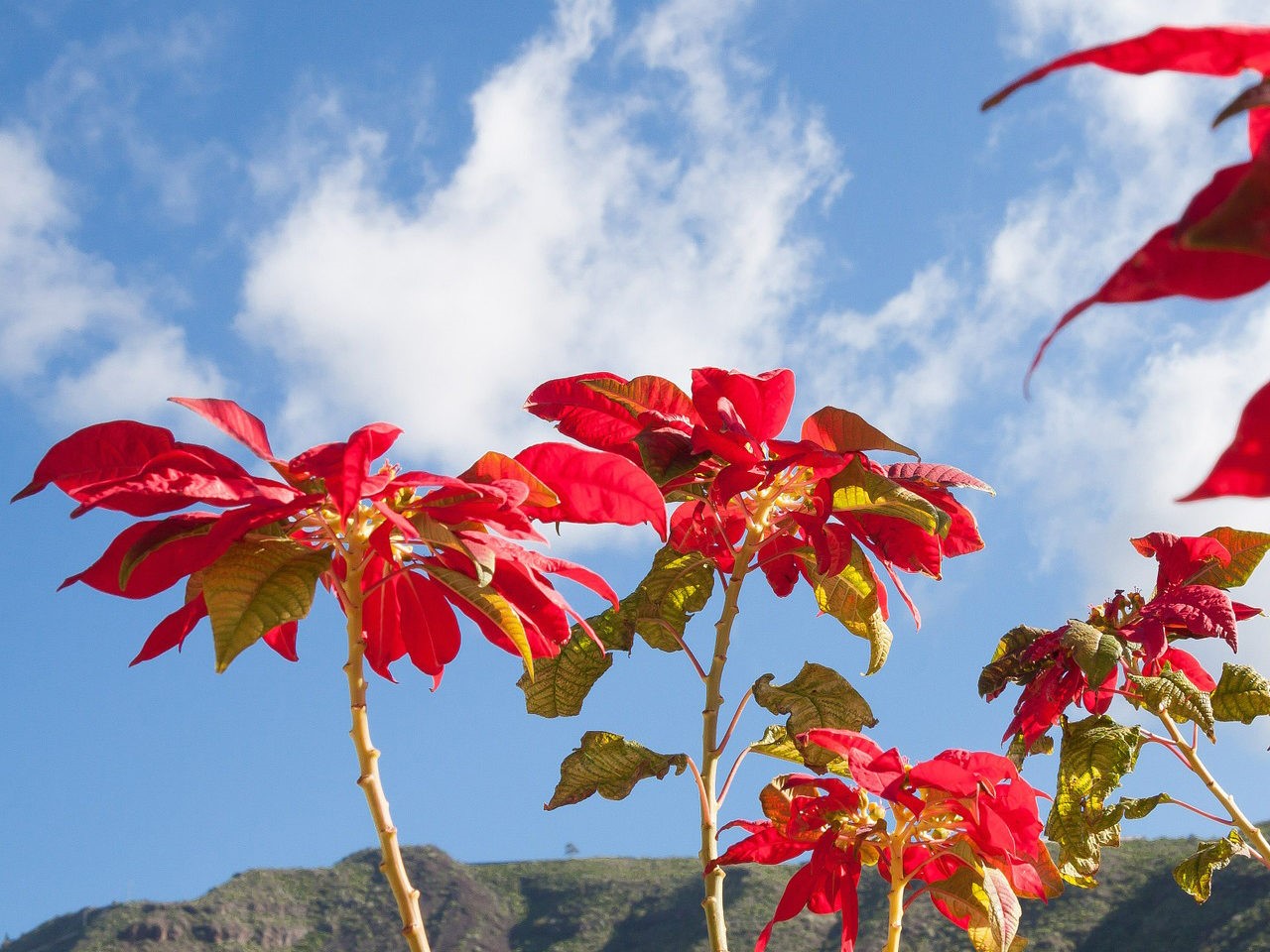
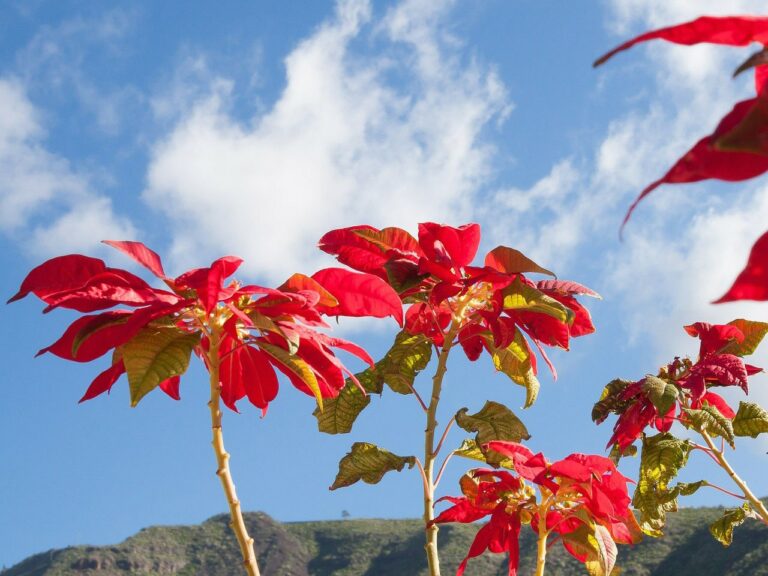
In the USA, as in Germany, the Poinsettia is the best-selling potted plant; according to the Federal Statistical Office, a staggering 17 million of them were sold in Germany last year. And this is despite the fact that they are sold almost exclusively at Christmas time. This makes the Poinsettia the most popular houseplant in Germany. And the shortest-lived. Because after the festive season, it usually ends up in the bin, whether or not it is the Virgin and Christ Child. Perhaps because plant behavior is deceptive. The Poinsettia often lose their first leaves after just a few days and seem to fade away. Some may think that the guide has done his job. Perhaps we also act this way because we are just as saturated as the market after the holidays, and the permanent sight of the last purple speckles causes slight nausea. What many people don’t know: In the wild, the Poinsettia grows and develops into a magnificent, perennial shrub that can grow up to four meters tall. And it turns red again every year – even within your own four walls. Recipe enclosed.
Shopping:
The Poinsettia likes it Mexican warm and is highly sensitive to the cold. Pre-Christmas outdoor sales stands may have already harmed it. The plant should be wrapped in paper during transportation.
Location:
Poinsettias like bright and warm conditions but without direct sunlight. It reacts to strong draughts by losing its leaves.
Water and fertilize correctly:
The Poinsettia does not tolerate waterlogging or a dry root ball. It should be watered regularly in moderation with lukewarm water or immersed in a bucket of water. It also likes high humidity. So spray it frequently with water in heated rooms. You can also place the pot in a bowl filled with pebbles and water. While it’s in bloom in winter, it hardly needs any fertilizer. As soon as it puts out new growth in spring, you can fertilize it about every two weeks until late summer.
Repot in spring:
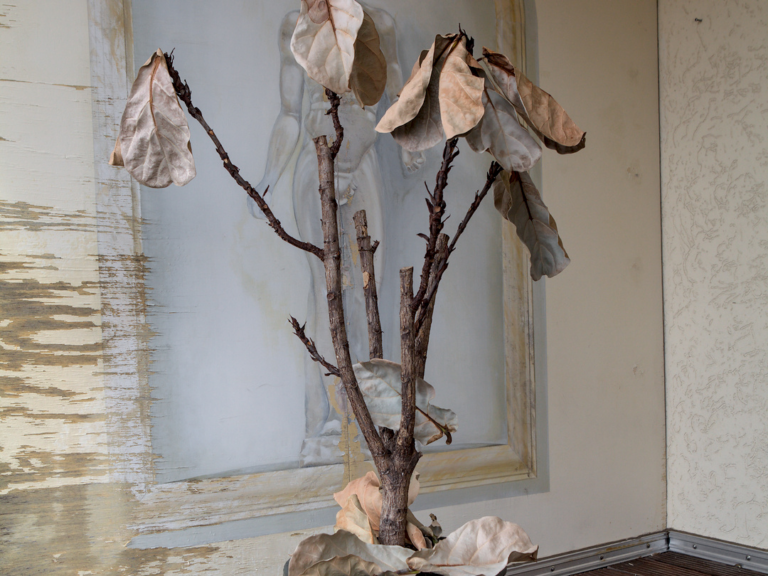
A happy Poinsettia is evergreen and does not lose its red leaves around Christmas, but in spring. It can then be repotted. Pruning is also a good idea from May: This stimulates branching.
Every year again:
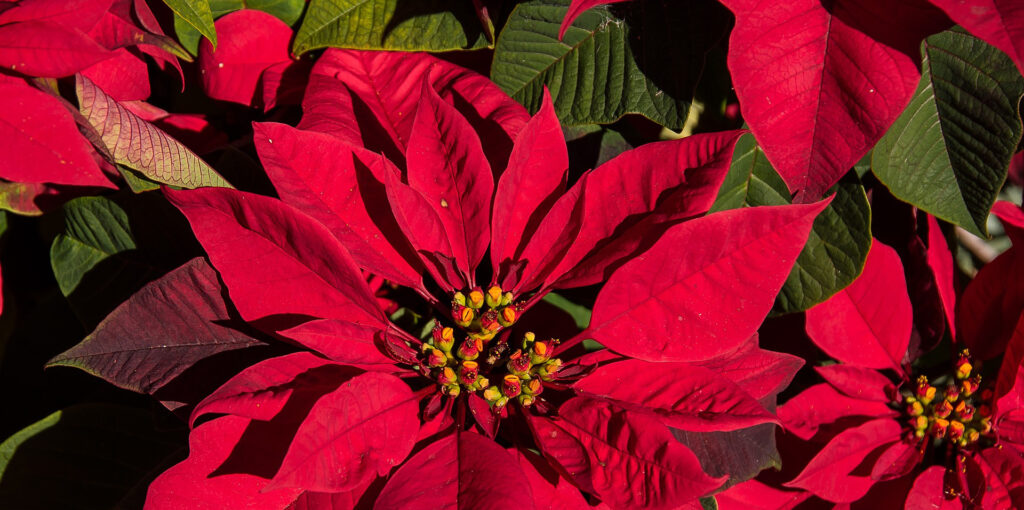
The red leaves of the Advent season are the result of industrious wholesalers covering the stars with foil again and again from October onwards. Excuse me? Yes! Poinsettias belong to the so-called short-day plants: they only form flowers and red bracts when the nights are long enough – at least 12 to 14 hours of uninterrupted darkness a day. This is what the wholesaler simulates. So if you want your poinsettia to grow red leaves and flower again in time for Advent, you have to do the same, from mid-September at the latest. After about six to eight weeks, it will form the red bracts again – which are not petals, by the way. Even small amounts of artificial light during the dark phase will confuse the star. So every evening, put it under a box or in the cupboard, and back to a bright window in the morning! It’s like Christmas: It’s worth the wait.