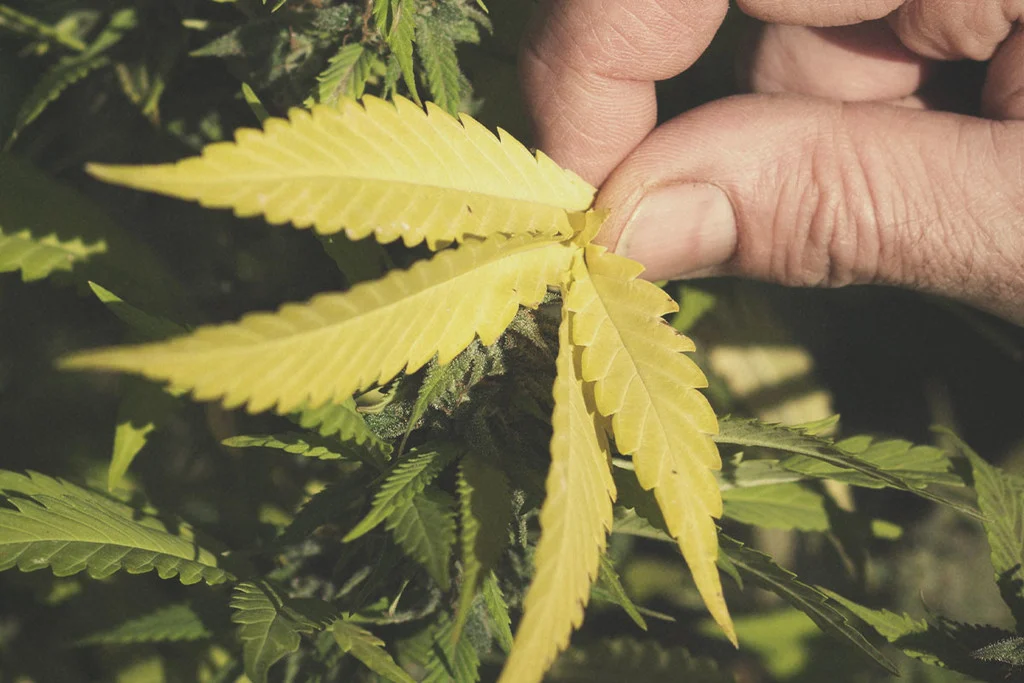
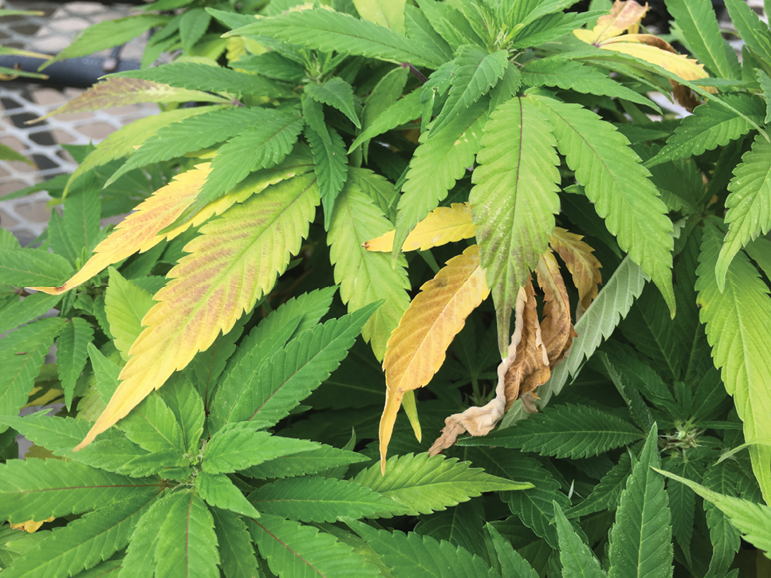
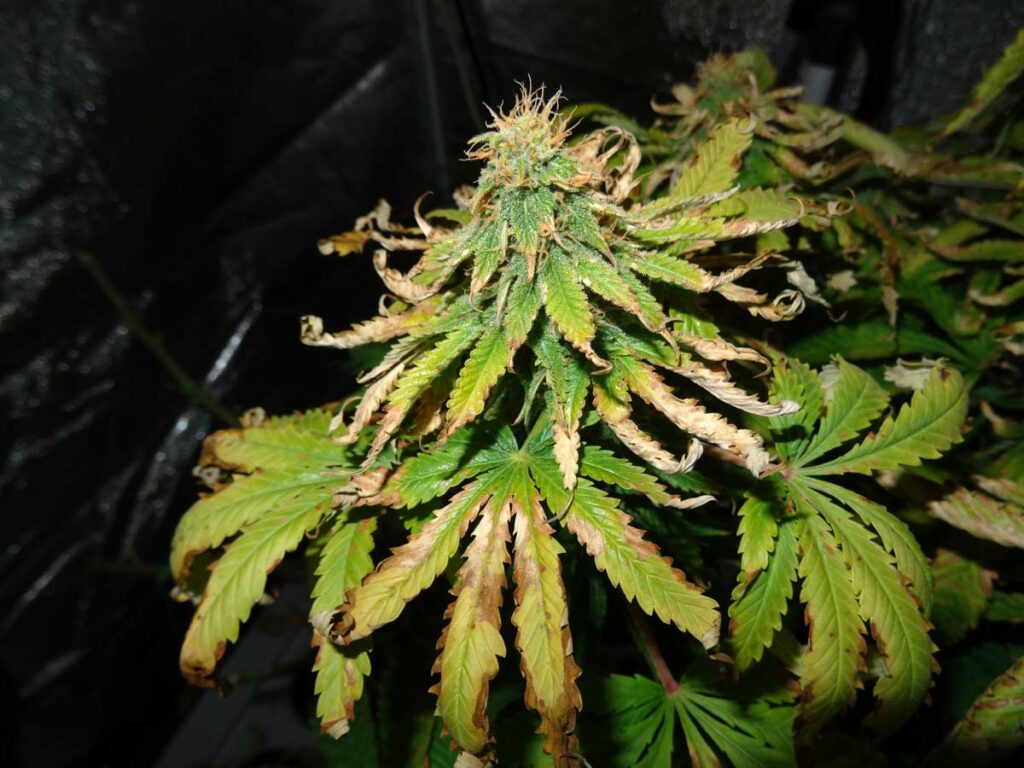
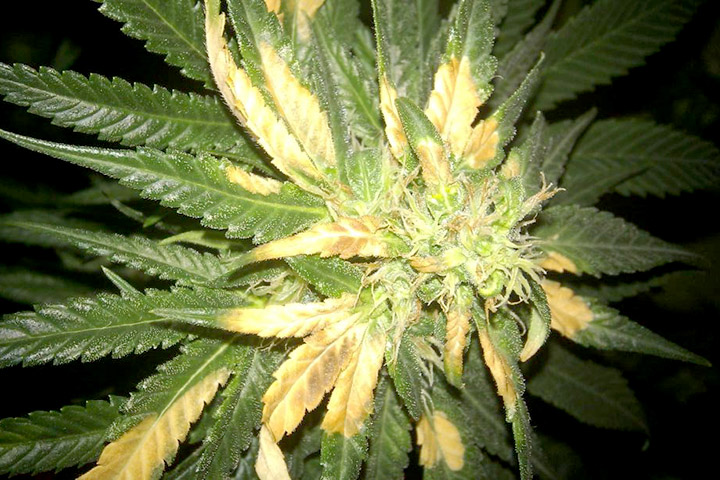
So far, your cannabis plants have been thriving beautifully. They look healthy and are growing larger each day. However, during a routine check, you notice some leaves turning yellow. You’re unsure about what’s happening to your plant and what steps to take. Don’t worry, plants are incredibly resilient, and this issue, known as Chlorosis in phytomedicine, can be easily managed. In this article, we aim to guide you on diagnosing your plant’s condition and implementing the right care measures to restore its vibrant green health.
No need to panic
First and foremost, it is essential to identify what you’re dealing with. Yellow leaves are a common symptom and can even be considered normal in certain circumstances. For instance, if your plant is in the maturing phase and your harvest time is nearing, it’s normal to see some leaves start yellowing. It’s important to remember that cannabis is an annual plant and naturally dies off once seeds have formed. You’ll also notice that autoflowering species tend to have more yellow leaves than the photoperiod variants when they are close to harvest. Some growers even use this as an indication that the plant is ready to be harvested soon.
Taking action
If you observe yellow spots or chlorosis during early stages such as the vegetative, flowering, or seedling phase, you may need to take action and recognize the issue at hand. Initially, you need to rule out any pest infestation, as the steps to address this would differ.
Fungal disease
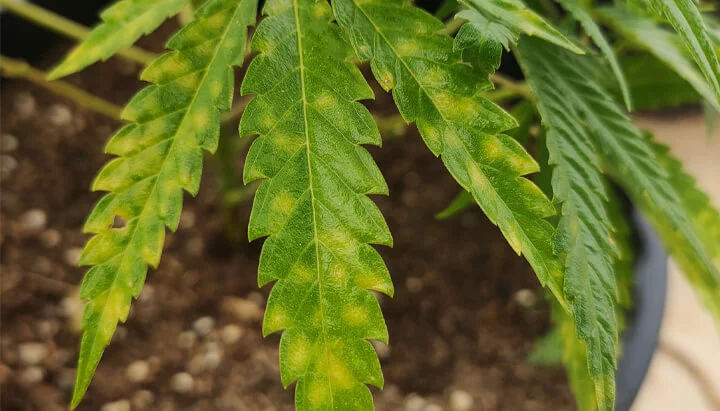
If the yellowing area appears as small spots or circles, it’s likely a fungal disease. One of the most common fungi causing yellow spots on cannabis plants is caused by the fungi genus Septoria. Unfortunately, there is no treatment for Septoria yellow leaf spots, but you can trim the damaged leaves with pruning scissors. Don’t forget to wear gloves and clean your tools before and after to prevent contamination. Avoid shaking your hands or making abrupt movements that could spread the spores of this fungus. Once you’re done and don’t see any more damaged leaves, you can spray the plant with some neem oil and let it do its job.
Pest
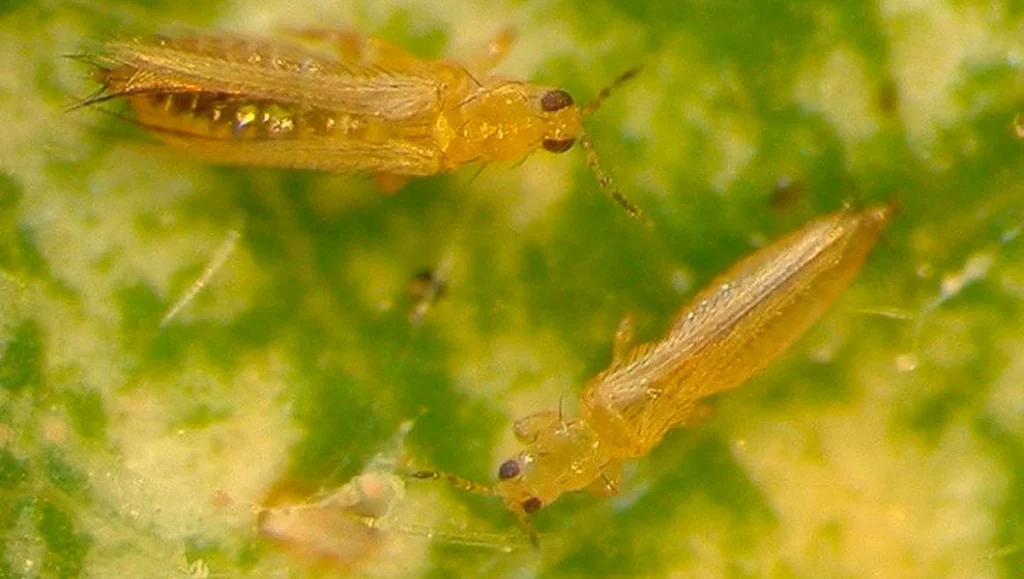
One significant challenge for cannabis growers is dealing with pests. Insects such as spider mites or thrips can pose a real threat, especially when growing outdoors. Slugs and snails can also become a problem, particularly if you’re growing in a garden.
To prevent an invasion of unwanted insects, you can use neem oil or consider strategic companion planting. Plants like lavender, basil, chamomile, and mint not only add pleasant scents and potential uses in your kitchen, but they also naturally repel some annoying herbivores. Furthermore, they attract pollinators and other beneficial insects that can help protect your cannabis plants.
Ladybugs are another beneficial ally. They won’t harm or eat your cannabis plants, but they will hunt and consume any unwanted pests. It’s crucial to avoid using pesticides, as they are not environmentally friendly and can even harm natural pollinators like bees. If you don’t have other options due to a heavy infestation, avoid consuming the parts of the plant that have been treated with pesticides.
This is why regular checks on your plants are vital. Early detection of pests is key to preventing significant losses. By implementing these strategies, you can ensure a healthier environment for your cannabis plants and a more fruitful yield.
pH levels
One of the less discussed but crucial factors in successful cannabis cultivation is pH levels. The term ‘chlorosis’ is used to describe a common issue where cannabis leaves turn yellow, which can often be attributed to a range of causes such as pests or natural processes like senescence when harvest time is approaching. However, another possible culprit behind chlorosis could be nutrient imbalance, and this is where pH levels come into play.
In the context of cannabis cultivation, pH levels are essential because they influence nutrient absorption. The cannabis plant absorbs water filled with nutrients through its roots, and the pH level of this ‘nutrient solution’ significantly impacts the availability of these nutrients for the plant.
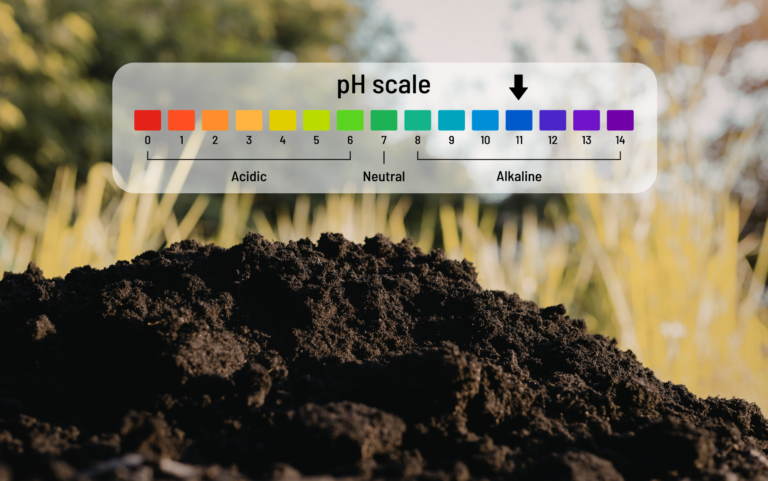
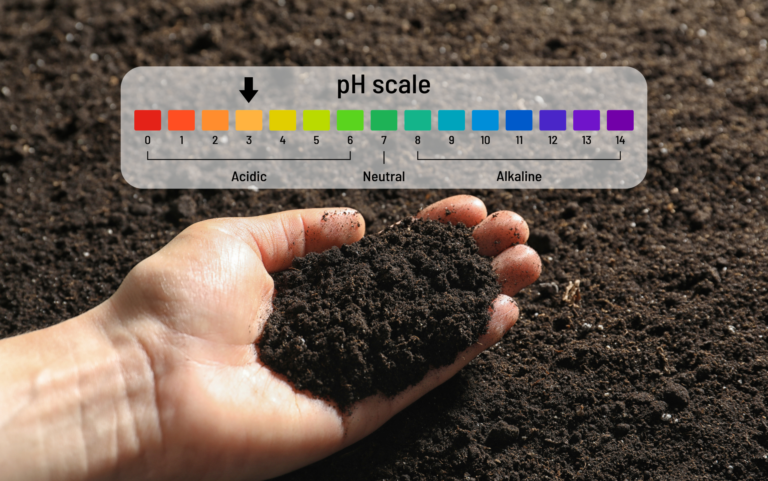
For soil-based cannabis growth, the optimal pH range is between 6 and 7, with 6.5 often considered the sweet spot. In hydroponics or soilless setups, the optimal pH level of the nutrient solution should be more acidic, falling between 5.5 and 6.5.
Here’s why this matters: nutrients in the nutrient solution are in the form of ions and interact with each other. pH serves as a regulator for these reactions. The optimal pH level is the one at which nutrients such as Nitrogen (N), Phosphorus (P), or Potassium (K) are most available to your plants. A pH level that is too high or too low will alter the form of these nutrients, making them unavailable to your plant.
In conclusion, managing pH levels effectively can help ensure that your cannabis plants are able to absorb the nutrients they need to thrive, reducing the risk of Chlorosis and promoting healthier growth.
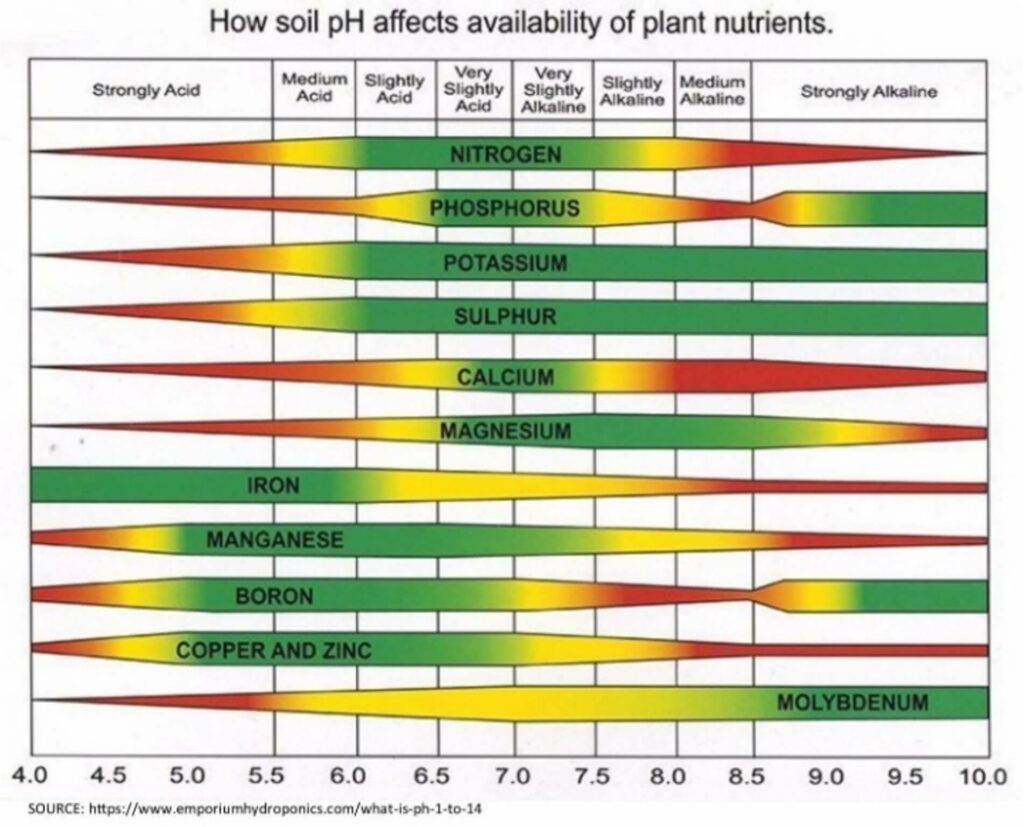
As depicted in the graphic, the majority of nutrients, including primary macronutrients (N, P, K), and secondary macronutrients such as Sulphur (S), Calcium (Ca), and Magnesium (Mg) are available in the optimal pH ranges of 6 and 7. Trace nutrients, ranging from Iron to Molybdenum, are also utilized by your plants but in smaller quantities. Therefore, maintaining a balanced pH and providing adequate nutrients to your plants is crucial. If you happen to notice a yellow leaf and suspect pH could be the cause, go ahead and test the pH of your soil or nutrient solution. Products such as pH up and pH down can be used for this purpose. However, the best option to avoid this issue is to purchase proper soil intended for growers, which already has the best pH balance and nutrients for your plants. Now, let’s move on to the next possible cause.
Nutrient imbalance
A nutrient imbalance is a common issue in cannabis plants, but it can be challenging to identify whether your plant is genuinely lacking a particular nutrient or if it is suffering from an excess of nutrients. It’s important to remember that over-fertilizing can be more harmful to your plant than a lack of nutrients. Hence, when fertilizing your plant, it’s best to follow the recommendations of the fertilizer brand you’re using. When in doubt, remember that it’s better to underfeed than overfeed your plants.
For those cultivating cannabis in soil, we highly recommend the use of organic soils and organic fertilizers. These promote symbiotic relationships with microorganisms (MOs) that ultimately lead to healthier plants less prone to nutrient imbalances. Furthermore, these MOs protect your plant against pathogens and are environmentally friendly. Unlike mineral fertilizers that directly feed the plants, organic fertilizers nourish the soil. Regrettably, the use of mineral fertilizers is a leading cause of biodiversity loss in soils today. Therefore, if you are using living soil containing MOs, avoid using mineral fertilizers as this will decrease the population of beneficial living organisms in the soil for your plant.
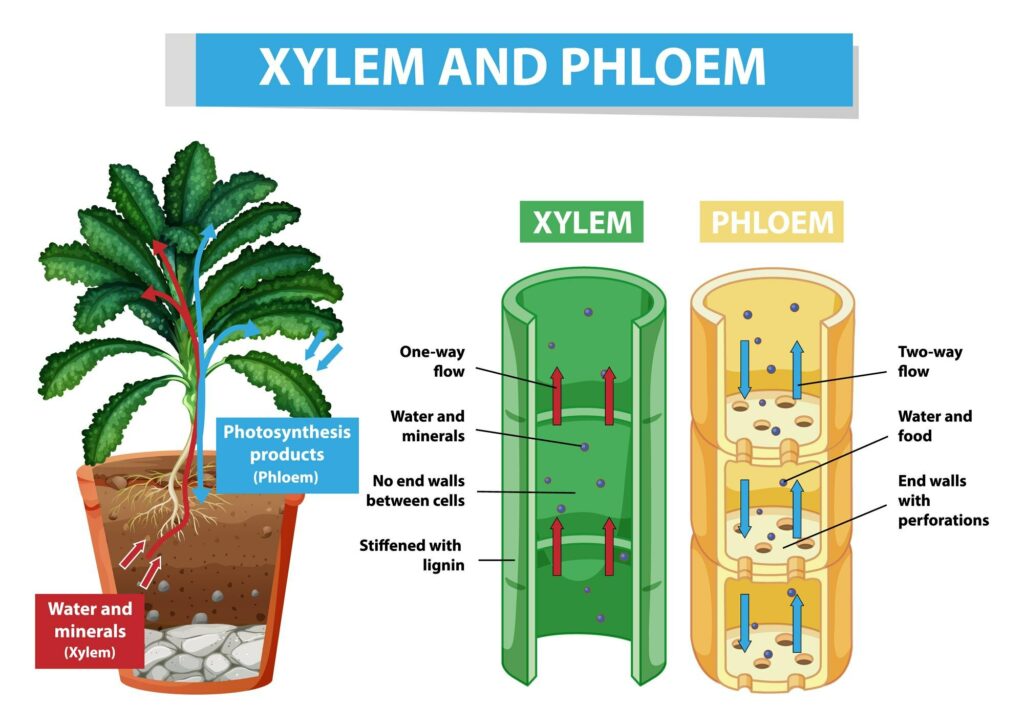
But let’s refocus on identifying nutritional problems in your plants and how to recognize a nutrient imbalance, if it occurs. As par of their circulatory system, Humans have veins and arteries, they distribute nutrients and oxygen throughout our bodies. Similarly, plants have a circulatory system, comprised of the xylem and the phloem. Their functions and role in the plant are explained below.
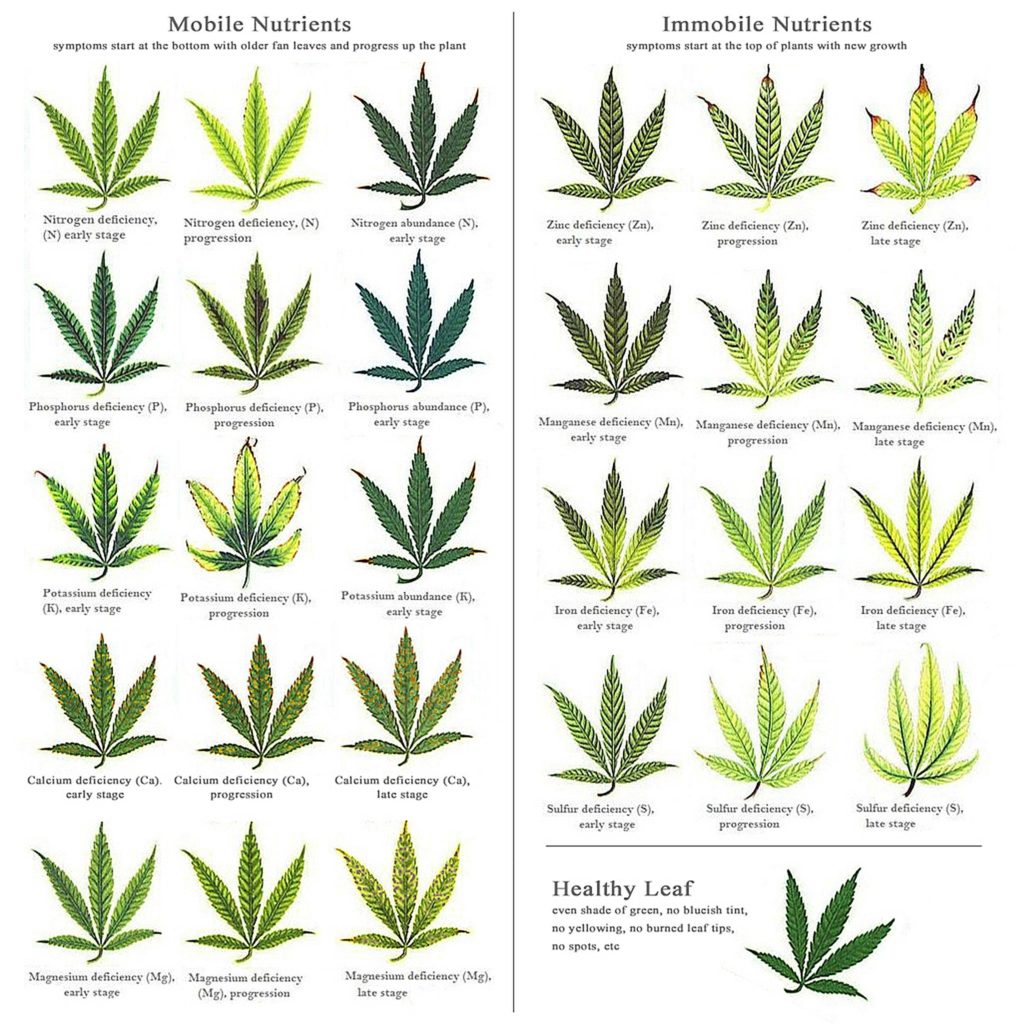
As you can see, the xylem facilitates the movement of water and minerals and only flows in one direction, while the phloem allows movement in both directions, upwards and downwards, and transports the products of photosynthesis. This is key to understanding the type of deficiency your plants may have. If you observe symptoms on the older leaves, you are dealing with a mobile nutrient deficiency. On the other hand, if the affected leaves are the newer ones, you are dealing with an immobile nutrient deficiency. This image can assist you in identifying the nutrient causing the imbalance.
Before you begin adding nutrients, it’s crucial to check your plant’s pH levels. This step is critical because unsuitable pH levels could prevent your plant from absorbing the nutrients it needs. If the pH balance isn’t the issue, examine your plant’s leaves. This can provide insights into which nutrient might be lacking. If your plant has an excess of nutrients, try flushing it with distilled water. This practice will help leach out any nutrient surplus. To prevent nutrient imbalance, consider using organic cannabis fertilizers or living soils. These options promote healthy soil, which in turn fosters healthy plant growth.
Incorrect watering
Watering can also lead to chlorosis, especially if your plant is suffering from prolonged under or overwatering. Remember, as with fertilization, it’s easier to recover a plant from underwatering than overwatering. If your plant is underwatered, the leaves will start to look weak and wilt. On the other hand, overwatered plants also exhibit leaves curling downwards, but with an additional problem – root rot, which can be identified by thin, brownish roots. In case of overwatering, it’s essential to ensure your plant has a drainage hole and allow it to dry out. Introducing microbes like mycorrhiza fungi can help establish a symbiotic relationship with your recovering plant.
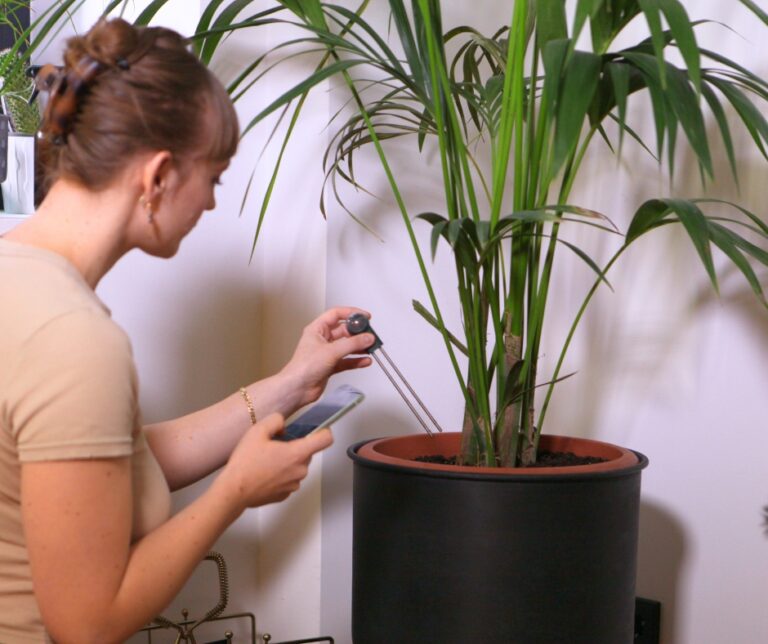
So, how can you avoid over or underwatering? The best approach is to use a Fyta Beam, that can help you track your plant’s needs and status, including water, temperature, light, and nutrients. If you don’t have a Fyta Beam, you can follow the watering rule of thirds, which is very common. Read more about this rule in the cannabis plant profile.
Temperature schocks
The optimal temperature range for cannabis growth lies between 20 and 28 °C. Managing temperature is relatively straightforward indoors with the use of fans and ventilation. However, outdoor cultivation can pose challenges, especially in mediterranean climates. Therefore, it’s crucial to choose your cannabis variety carefully, based on your location’s climate.
If the temperature is too high, your plant will begin to dry out faster. Conversely, if it’s too cold, your plant’s metabolism will slow down, eventually leading to its demise. To avoid temperature-related issues, try to prevent sudden temperature fluctuations.
It’s also important to remember the direct relationship between relative humidity and temperature. Relative humidity is the amount of water a volume of air can hold. This capacity increases with warmer air and decreases as the air cools, which is why condensation occurs on car windows or other glass surfaces. In a very warm environment, if no water vapor is added, the air becomes dry, causing your plant to suffer. On the other hand, if the temperature is too low, the biological machinery responsible for your plant’s growth slows down, leading to delayed growth and similar symptoms.
If you’re growing outdoors, be mindful of direct sunlight, which can increase temperature. For indoor cultivation, the focus should be on maintaining optimal ventilation and keeping the temperature within the aforementioned range.
Light burn
Light is fundamental to plant growth, but, as with many things in life, an excess can be detrimental. This principle is particularly true in cannabis cultivation, where excessive light exposure can cause ‘light burn.’
Light burn is a common issue, especially in indoor cultivation settings, where lamps are typically positioned close to the top of the plant. This problem is distinct from nutrient imbalances, as light burn only appears on leaves closest to the lamp.
To prevent light burn, it’s important to remember that the safe distance between your plant and the light source is approximately 30cm. However, it’s essential to consider that when growing indoors, space is often limited. Your plant will grow upwards, so you need to anticipate this growth, adjust the distances accordingly, and select a suitable variety that matches your space limits. This foresight will prevent your plant from suffering damage from light exposure as it reaches its maximum height.
Another challenging aspect of light management within indoor setups is the heat produced by light sources. This heat can further stress your plants, highlighting why adequate ventilation is crucial in indoor setups.
By meticulously managing the distance and intensity of your light sources, you can prevent light burn, thereby creating an ideal growing environment for your cannabis plants. The Fyta Beam can assist in monitoring your setup, helping you avoid issues like yellowing leaves, a common problem in cannabis cultivation.
Use the FYTA Beam as your personal plant assistant – for big buds that exceed all expectations!